The healthcare sector is entering 2026 in the middle of a profound transformation. Developing a new drug now costs more than $2 billion, regulatory pressure continues to mount, and healthcare professionals are receiving more information than ever — with less time to process it. The question has shifted from what to communicate to how to ensure the message gets through, is understood, and is remembered.
The bigger picture explains why this matters. According to Deloitte, by 2040 50% of global healthcare spending will be directed toward health promotion, recovery, and disease prevention — compared with just 17% in 2019. In other words, the sector is moving from treating illness to engaging, educating, and supporting healthy populations. And that shift places communication, training, and patient experience at the very center of the business.
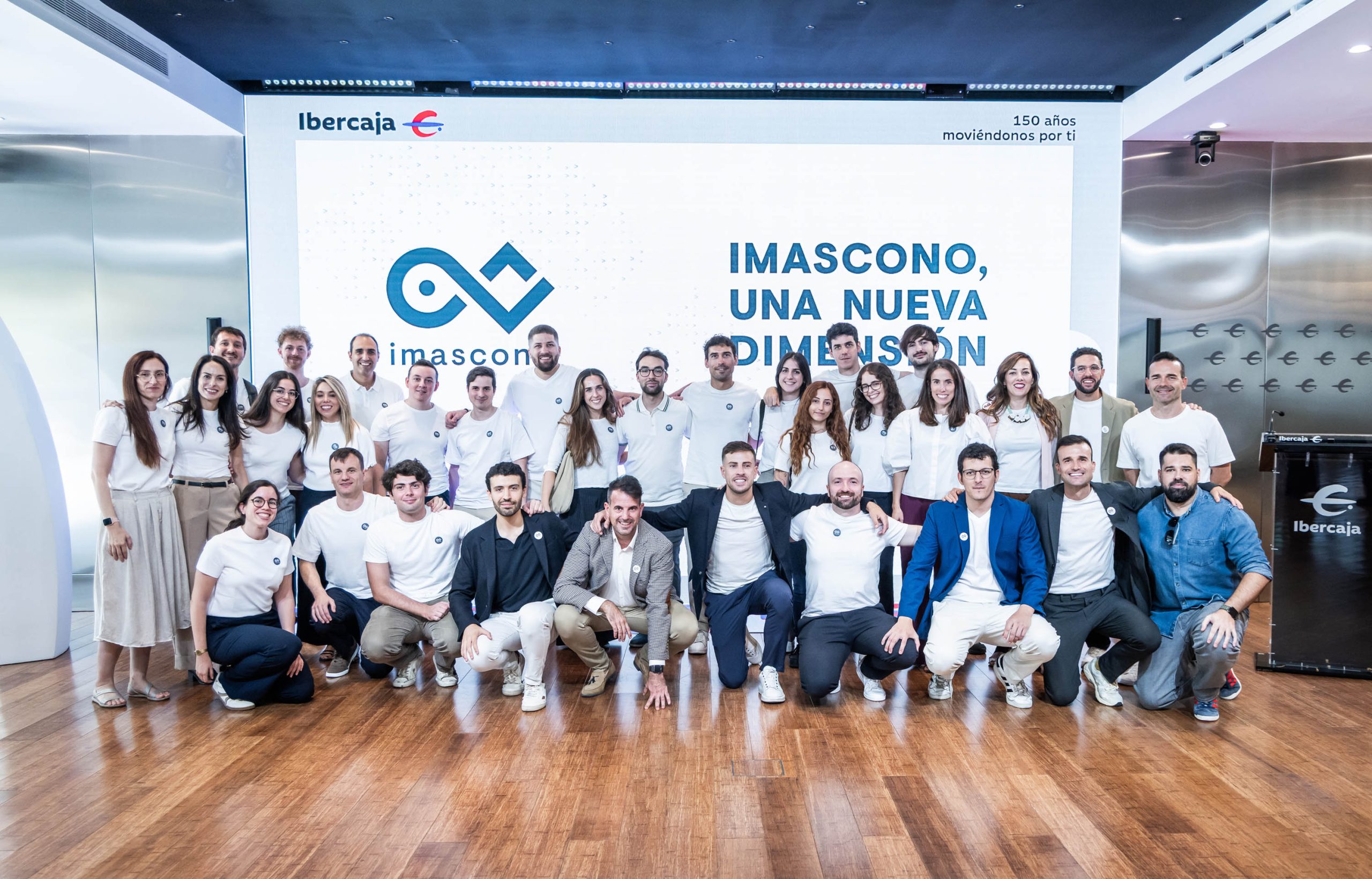
At Imascono Health — the specialized health division of the tech company Imascono — we have spent more than ten years working alongside pharmaceutical companies, hospitals, laboratories, and healthcare professionals across the U.S., Europe, and Latin America. And if there are two areas where we see most clearly how technology is redefining healthcare communication, they are interactive marketing tools and experiential events.
Interactive marketing: making the complex understandable
Healthcare communication faces a structural challenge: the products are inherently complex — mechanisms of action, clinical evidence, protocols — and the audience is highly specialized. Healthcare professionals don’t need simplification; they need clarity.
That is where interactive marketing tools are making the real difference. We are no longer talking about flashier digital brochures. We are talking about AI-powered virtual assistants, augmented reality experiences, interactive infographics, dynamic 3D content, and scientifically rigorous visual resources that allow sales and medical teams to explain complex products in ways that are clear, engaging, and memorable. The trend is more than anecdotal: 51% of healthcare organizations have already deployed AI to automate patient care, and virtual and home-based medical care is projected to grow by a factor of 1.82 over the next decade.
A clear example is Sania, the AI-powered conversational assistant we developed with Sanitas to improve patient support and orientation inside the hospital setting — helping patients find answers and complete basic tasks more quickly, accessibly, and humanely. Another is the Certest Virtual Twin, an interactive digital replica of Certest’s industrial environment, designed to make a highly specialized biotech operation accessible from anywhere in the world. The goal was not to «show off a building» but to build trust and clarity by helping people understand complex processes transparently. Companies such as Bayer and Santen are investing in similar initiatives — digital experiences that allow professionals to explore products in a more visual and useful way, both at conferences and on their own platforms.
Experiential events: from presence to participation
Events remain one of the most powerful channels in healthcare marketing, but their role has changed completely. Being present is no longer enough — brands need to create experiences. Attendees have limited time, are overloaded with messages, and what stands out today are spaces that invite interaction, learning, and participation.
The data confirms the shift. According to Eventify, 80% of event planners believe hybrid formats generate stronger engagement than any other event format. The conclusion is straightforward: experience has become the language of the new healthcare event.
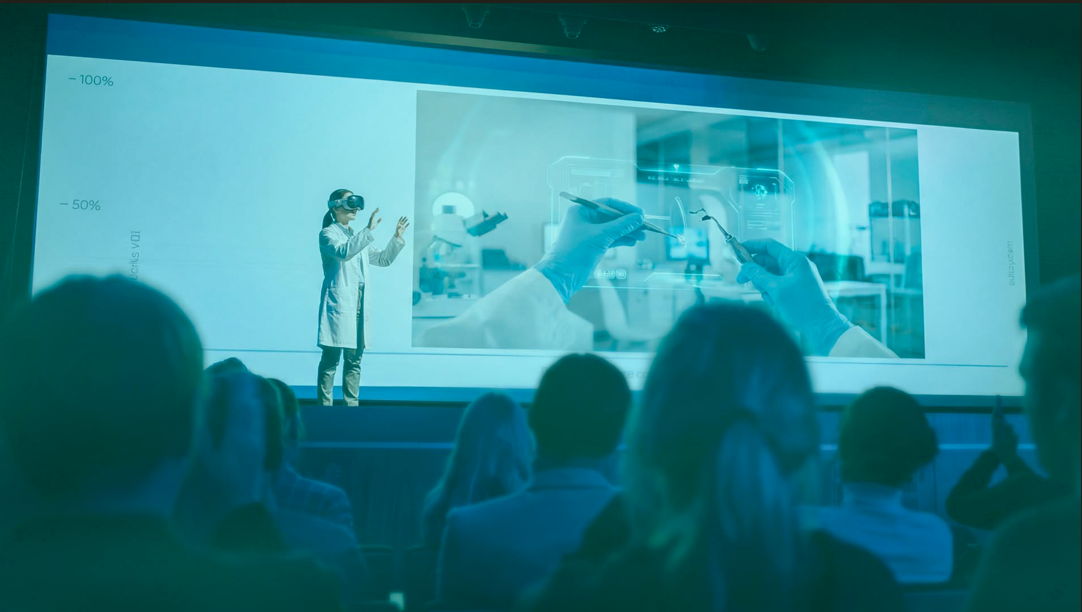
The experiential events we design at Imascono Health combine physical design with a digital layer — phygital formats that integrate augmented reality, virtual reality, gamification, 360° booths, and virtual congresses to turn attendees into protagonists rather than spectators. The approach covers the entire cycle: visual storytelling, technical content strategy, interactive experiences, engagement and activation, and on-site support during the event itself.
A clear example is Event IDEA (Interactive Derma Academy), the hybrid dermatology event we have produced for Viatris across four consecutive editions — a 360° service spanning strategy, creative direction, audiovisual production, live streaming, attendee management, and live interactions, with more than 40 hours of dermatological content and 14 PhD and MD speakers per edition.
When Santen wanted to mark a decade of innovation in glaucoma, they partnered with VML Health and Imascono Health on Shin, a human-like AI avatar that moderated the entire event, welcomed attendees individually, dynamized the agenda, and answered medical questions in real time backed by validated scientific literature. One in four attendees interacted directly with Shin — a clear signal of how AI is reshaping the role of moderation and engagement in scientific events.
Bayer Kimchi, an augmented reality photocall designed for Bayer‘s booth at a veterinary fair, was not built to «look impressive» but to spark real conversations and generate qualified leads through gamification. Visitors had to catch viruses to protect virtual animals, leaving their contact information to play. The result: over 1,000 registered participants, 30 hours of active gameplay, and the most visited stand of the fair.
And the Royal Canin Event, co-organized with MSD Animal Health and Grupo Asis, took the format one step further: the first joint virtual veterinary congress between both companies, hosted entirely in a 3D virtual space, with branded virtual stands, 20 hours of live talks, and more than 15,000 visits across three days. The hybrid logic enabled wider reach, more speakers, and richer real-time engagement metrics than a physical-only format would have allowed.
Marketing and events: two sides of the same strategy
Interactive marketing and experiential events are not two separate disciplines — they are two expressions of the same shift. Digital assets developed for a medical consultation, a 3D anatomical model, an interactive infographic, or an AI assistant, can later be repurposed for a trade show booth, a virtual conference, or a 360° showroom. And the opposite is equally true: an experience designed for an event can become a sales tool the commercial team uses throughout the year.
That continuity is what multiplies the return on investment. Instead of producing «single-use» content, the brands performing best in 2026 are thinking in terms of reusable content ecosystems — one asset, adapted to different formats and to different moments in the journey of a healthcare professional or patient.
«When professionals understand things faster, conversations improve, doubts decrease, and communication becomes truly effective,» explains Leticia Arroyo, Health Division Manager at Imascono Health. «It’s not about adding more technology — it’s about choosing the right tool to solve a real problem, explain things better, connect better, and leave a lasting impression.»
Closing thoughts by Imascono Health
The organizations shaping healthcare communication in 2026 are not the ones investing in the most technology, but the ones building connected ecosystems where every asset — whether designed for a sales rep, a congress, or a digital platform — works harder, lasts longer, and earns more attention.
If your organization is exploring interactive marketing tools, experiential events, or both, Imascono Health would love to share practical examples and lessons from real projects. If this resonates, let’s connect.