The U.S. healthcare system is under pressure from every direction. Workforce shortages, rising operational costs, and the growing complexity of medical and veterinary protocols are putting training at the center of the conversation. With U.S. healthcare spending reaching $5.3 trillion in 2024—roughly 18% of GDP—organizations are rethinking how they prepare their teams, onboard new professionals, and ensure consistency across increasingly distributed operations. Traditional training models—manuals, lectures, classroom sessions—are slow to scale, costly to replicate across geographies, and rarely designed for the hands on nature of clinical, veterinary, or biosecurity work. In environments where a single procedural error can have real consequences, learning by reading simply isn’t enough.
That’s why immersive training is becoming one of the most meaningful shifts in healthcare education heading into 2026. Studies from Accenture point to an 80% reduction in training time using VR, while PwC estimates that immersive learning is up to four times faster than traditional classroom instruction. The message is clear: learning by doing is no longer a philosophy – it’s a measurable advantage.
Immersive Training: learning by doing, without the risk
At Imascono Health—the specialized health division of the tech company Imascono we have spent more than ten years working alongside pharma companies, hospitals, veterinary laboratories, and healthcare professionals across the U.S., Europe, and Latin America. And if there is one area where we see technology clearly redefining how healthcare teams prepare for real-world practice, it is immersive training.
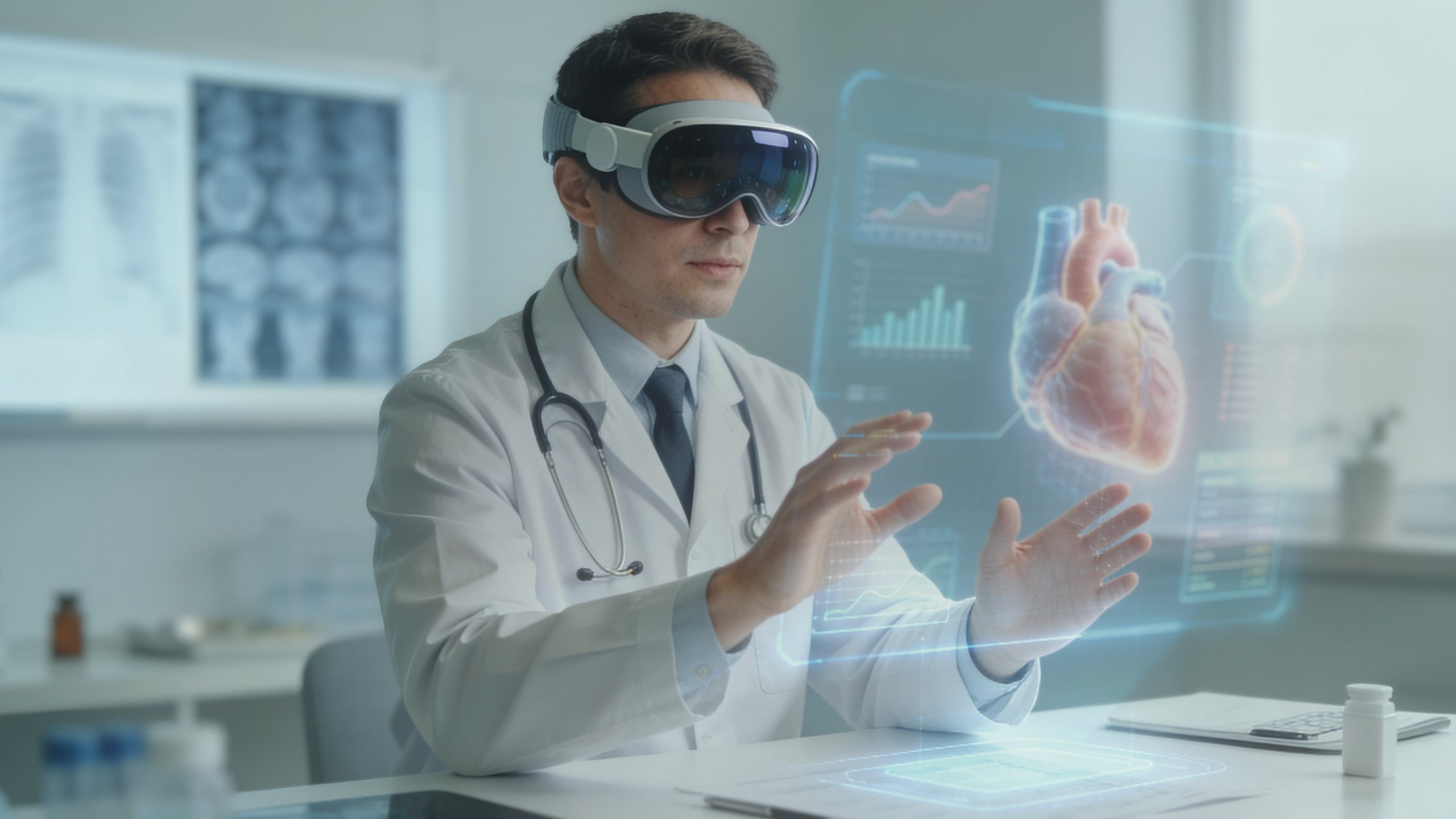
Our Immersive Training service reimagines high-quality education for the healthcare sector, transforming dense technical content into interactive experiences through fully immersive VR simulations that place learners inside a faithful replica of the real environment they will eventually work in.
These kinds of Virtual Trainings are designed for one purpose: letting professionals practice complex procedures in a safe, controlled, and fully personalized virtual environment. Every experience is built to replicate the exact spaces, protocols, and equipment of the client organization—so what is learned in VR transfers directly into day-to-day practice. The benefits go beyond the obvious, they:
- Enable safe practice in high-risk environments, where mistakes in the real world carry real consequences.
- Deliver stronger knowledge retention, because immersive experiences engage more senses than slides ever will.
- Reduce operational costs, eliminating the need for real materials, transportation, or interruption of daily operations during early training phases.
- Produce precise performance data, since every action in the simulation is logged and analyzable.
- Bring scalability and global consistency, enabling teams across multiple locations to receive the exact same training quality and content.
4 cases studies that are reshaping healthcare training
With Boehringer Ingelheim, we transformed the technical manual of a new vaccine into a full VR training simulation for laboratory staff. The project enabled synchronized training across 20 countries, saved over 148,000 minutes in travel and material costs, and registered more than 11,800 virtual injections—all while standardizing the learning experience across every market.
Veterinary Scholars Program, developed by the USDA Agricultural Research Service and Boehringer Ingelheim is a VR training that recreates a complete poultry farm environment, including strict U.S. biosecurity protocols. The experience has toured universities, research centers, and professional events across the U.S.—from Puerto Rico Veterinary Research Scholars to USAHA, AAVLD, and NBAF. 96% of veterinarians rated it four or five stars, and nine out of ten said they would repeat the experience.
For Athens Area Humane Society, sponsored by Boehringer Ingelheim Animal Health, we created VR Training: Infectious Diseases Prevention in Shelter. With nearly 10,000 volunteers onboarded each year in Athens, Georgia, the challenge was clear: teach proper biosecurity, hygiene, and infection-prevention protocols before volunteers interact with real animals. The immersive experience allows them to practice routines, use protective equipment correctly, and make real decisions in a faithful recreation of the shelter—so protocols are internalized from day one.
And with CEVA Animal Health—one of the three fastest-growing veterinary pharmaceutical companies worldwide we developed Velactis VR. The simulation recreates a dairy farm environment where users learn the correct use, benefits, and application of a new product through gamified challenges, video content, and knowledge quizzes. The experience is available in five languages, takes under ten minutes to complete, and 84% of participating veterinarians report significantly improved retention of the key concepts.
A human-first approach to training
“Immersive training makes onboarding more impactful,” explains Leticia Arroyo, Health Division Manager at Imascono. “Teams learn faster, internalize protocols sooner, and the entire experience becomes something unique and memorable.”
That’s the thread connecting every project above. The value of Virtual Training isn’t the technology itself—it’s what the technology enables: better-prepared professionals, fewer errors in the real world, and measurable outcomes from day one. If your organization is exploring immersive training. Imascono Health would love to share practical insights and concrete examples. If this resonates, let’s connect.